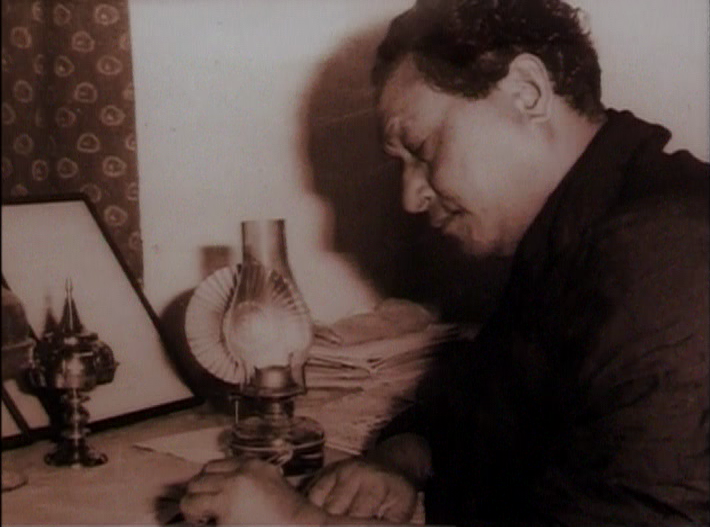
Kalaguru Bishnu Prasad Rabha
কলাগুৰু বিষ্ণুপ্ৰসাদ ৰাভা (১৯০৯ – ১৯৬৯)
A polymath of peerless stature—poet, dramatist, revolutionary composer, painter, freedom fighter, and the fierce ideological compass of Assam's peasant liberation and tribal cultural resurgence.
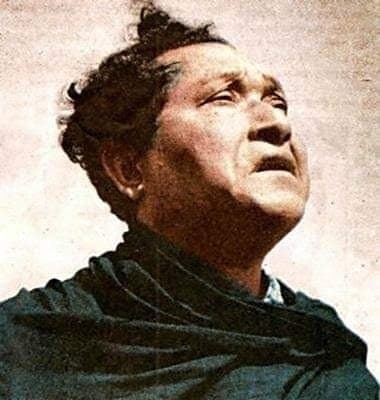
A Life Dedicated to the People & Freedom
Few personalities in modern Indian history match the multidimensional genius of Bishnu Prasad Rabha. Born to an illustrious family in Dhaka, he renounced aristocratic privilege to become a wandering minstrel and armed revolutionary.
Rabha believed passionately that true freedom was incomplete without the cultural emancipation and economic empowerment of the most marginalized peasant and tribal working classes. He harmonized classical Indian traditions with raw indigenous vitality, forever redefining Assam’s cultural landscape.
"I am not an artist who lives in an ivory tower. My music, my poetry, and my breath belong to the sweat of the cultivator and the strength of the worker."— Bishnu Prasad Rabha
The Polymath's Creations
Explore the timeless body of songs, books, paintings, theatre, and films crafted by Kalaguru.
Bishnu Rabha Sangeet (সংগীত সাধনা)
Over 100+ Immortal Musical Compositions
Rabha formulated a distinct genre of Assamese modern and classical music known as Bishnu Rabha Sangeet. Seamlessly weaving Indian classical ragas (Bhairav, Khamaj, Malkosh) with indigenous folk rhythm cycles of the Rabhas, Bodos, and Tea Tribes, his songs encompass romance, patriotic fervor, and revolutionary worker empowerment.
Key Works & Creations:
Literature & Treatises (সাহিত্য আৰু গৱেষণা)
Philosophical Essays, Ethnography & Prose
A trailblazing essayist, poet, and cultural researcher, Bishnu Prasad Rabha wrote extensively to document indigenous tribal lineages and articulate the composite foundation of Greater Assamese society (Brihattar Asomiya Kristi).
Key Works & Creations:
Painting & Visual Art (চিত্ৰকলা)
Iconic Religious & Tribal Masterpieces
Rabha was an extraordinary painter whose visual art captured sublime spirituality and authentic indigenous life. His most celebrated work is the majestic portrait of Mahapurush Srimanta Sankardev, depicting the 15th-century Vaishnavite saint in calm divine contemplation—a painting that became the canonical image revered across every Namghar in Assam.
Key Works & Creations:
Theatre & Cinema (নাট্য আৰু চলচ্চিত্ৰ)
Dramaturgy, Acting & Screen Direction
Associated with Tezpur's legendary Ban Theatre, Rabha brought dynamic realism to the stage and screen. Working hand-in-hand with regional masters, he modernized regional performance arts.
Key Works & Creations:
Chronicles of an Extraordinary Life
Milestones from the revolutionary life and immortal legacy of Bishnu Prasad Rabha.
Birth in Dhaka
Born on January 31, 1909, in Dhaka (Bengal Presidency) into a prominent Rabha family. His father, Sardar Gopal Chandra Rabha ('Bara Gopal'), was an esteemed officer in the British Indian Army and Governor's security detail.
Academic Brilliance & Nationalist Revolt
Educated at Dhaka Collegiate School, St. Paul's Cathedral Mission College, and Scottish Church College, Calcutta. Outstanding in academics, gymnastics, football, and debating. In 1930, he joined the Non-Cooperation Movement against British colonial rule, sacrificing his formal university degrees.
Bestowal of the Title 'Kalaguru'
During an all-India cultural assembly at Kashi Hindu University (Banaras Hindu University), Rabha performed the spellbinding Shiva Tandava dance. Mesmerized by his divine grace and deep mastery over classical aesthetics, Dr. Sarvepalli Radhakrishnan (later President of India) publicly conferred upon him the everlasting title 'Kalaguru' (Master of the Arts).
The Revolutionary Underground ('Sainik Silpi')
Deeply pained by the exploitation of impoverished farmers, tea garden laborers, and indigenous peasants, Rabha embraced Marxist-Leninist ideology and joined the Revolutionary Communist Party of India (RCPI). He lived underground for six years across deep forests and remote villages, leading peasant movements. He donated all of his 2,500 bighas of ancestral land to landless farmers.
Election to Legislative Assembly
Elected as an independent Member of the Legislative Assembly (MLA) from the Tezpur constituency in 1967, continuing his fierce advocacy for tribal welfare, peasant rights, and cultural revitalization on the legislative floor.
Eternal Departure & Rabha Divas
Passed away on June 20, 1969, in Tezpur while battling cancer. The Government and people of Assam honor his immortal legacy every year on June 20 as 'Rabha Divas' (ৰাভা দিৱস) across the state.
Ideological Pillars & Social Philosophy
Kalaguru’s intellectual vision transcended his era, championing social justice, radical altruism, and ecological kinship.
The Composite 'Bor-Axom' Identity
Kalaguru firmly rejected narrow chauvinism. He proved that Assamese culture is not homogenous but an inclusive confluence of Aryan, Austro-Asiatic, and Tibeto-Burman tribal streams (Rabhas, Bodos, Garos, Kacharis, Ahoms, Mishmis, and tea tribes).
Art as an Instrument of Mass Liberation
Believing that 'Art is not for mere aesthetic luxury, but for life and liberation', he walked thousands of miles barefoot across peasant hamlets, composing songs that awakened oppressed masses against landlordism and colonial servitude.
Radical Altruism & Indigenous Solidarity
A true soldier-artist who practiced what he preached, Rabha voluntarily renounced aristocratic wealth and gave away 2,500 bighas of his hereditary land in Tezpur to poor tenant farmers, choosing a life of wandering austerity among the common people.